If you don’t know, I’m a big fan of Frank Henenlotter, especially his genre films like Basket Case, Frankenhooker and Brain Damage. Following his 2008 comeback film Bad Biology, Henenlotter has steered away from fiction films and has instead been producing documentaries about the behind-the-scenes of the cinema that influenced him. However, it wasn’t Henenlotter’s name that attracted me to Boiled Angels: The Trial of Mike Diana but its very premise.
This documentary tells the story of how Floridian underground cartoonist Mike Diana became the first artist to be convicted of obscenity in America.
The Angle
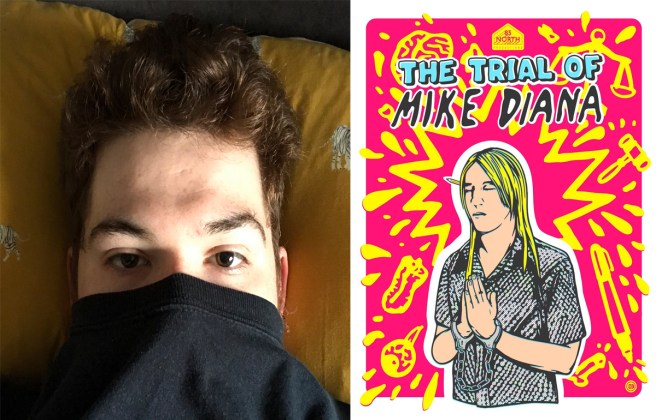
With the title cards and transitions done in the style of Diana’s art, it’s pretty clear that the documentary sides with him in the case and while the film does present the opposition’s point of view, it occasionally does so in a comedic and condescending manner. Jello Biafra narrates the film with a camp 50s’ movie trailer-like voice, which really expresses the absurdity of the trial.
At the same time the film doesn’t shy away from the sinister quality of Diana and his work. Specific strips are shown with voice actors reciting the speech bubbles. Most of them are presented in the same over-the-top fashion as Biafra’s narration, one of them however, entitled Grasshopper Boy, is presented in a more serious and disturbing manner.
At this point in the film questions regarding Diana’s mental health arise, questions of whether he was abused as a child or whether he enjoys the sadism displayed in his comics. For a moment you wonder if Diana is more than just an eccentric artist. Then the film reminds you that this was taking place in the 90s’ and that murder and paedophilia were common topics in most news programs. Perhaps Diana was simply responding to the monstrous zeitgeist of his time.
Regardless of your position on Diana’s case, the argument the film makes for him is convincing. The image of Diana as an underdog battling the Goliath that is the conservative Christian public who prosecuted him is sympathetic and engaging. The film certainly got me on his side.
The Message
Some would say that a story like this is perfect for today with debates regarding political correctness and how far artists and comedians should be allowed to go with their content becoming more common. Some would argue that this film is a warning of what boundary-pushing creative people will suffer in the near, apparently Orwellian future.
While I don’t think such a future awaits us, I do think Boiled Angels tells a cautionary tale of the ridiculous lengths people can go to eliminate something they don’t like. It doesn’t outright defend Diana’s art but his right to create it. It doesn’t completely attack the prosecution’s position but the fact that they won.
With its striking subject matter and distinct visual style, Boiled Angels: The Mike Diana Story is a pretty good documentary for anyone interested in the arts and matters of free speech and political correctness. Anyone who’s not so familiar with underground art and is uncomfortable with displays of murder and rape, I would of course encourage to avoid Boiled Angels. For art and culture enthusiasts like me however, I’d recommend it.
I give Boiled Angels: The Mike Diana Story a good 8 out of 10.
 Duffhood
Leave a comment