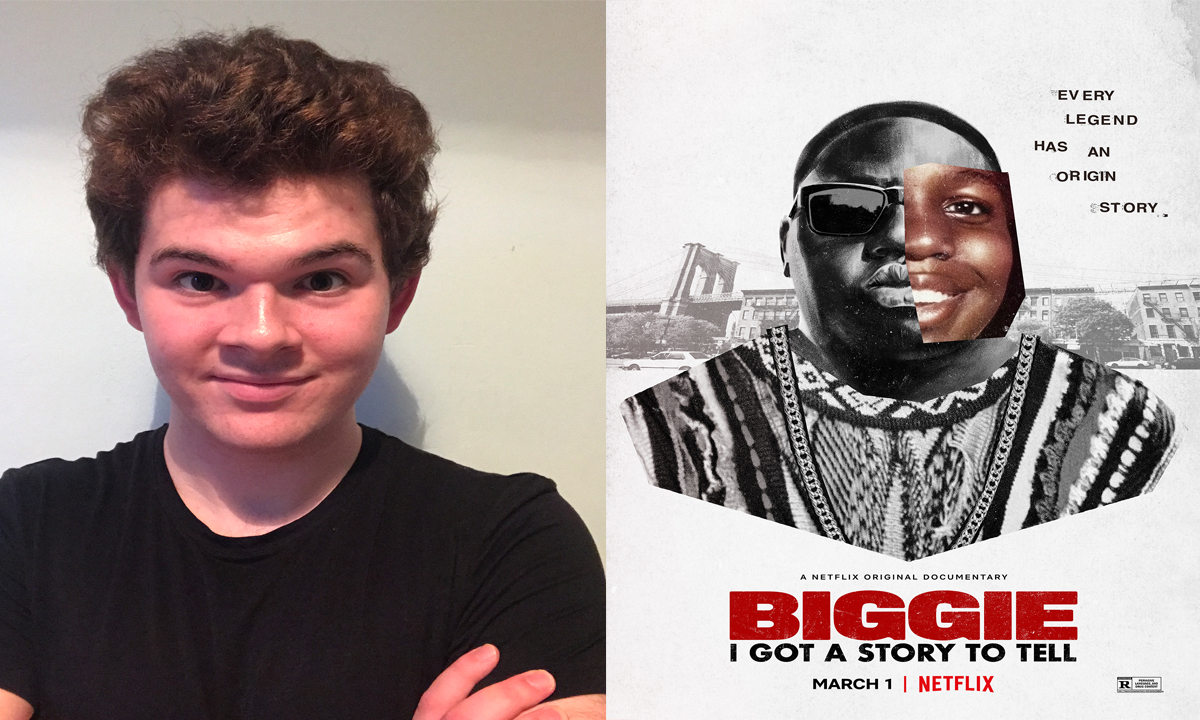
I’ve never been a hip-hop fan but like most people I know very well who Biggie Smalls was and about the tragedies that were his and Tupac Shakur’s murders. I’m aware that Biggie has been the focus of countless news reports, documentaries and biopics, Nick Broomfield’s film on him and Tupac being the one I’m most familiar with. What attracted me to Biggie: I Got A Story To Tell was its use of candid footage shot by Biggie’s friends. I went in believing that the film was going to tell me something about Biggie I hadn’t heard before and I’m happy to say that it did.
This Netflix original tells the story of Christopher Wallace’s journey from street hustler to Hip Hop pioneer.
The Angle
I Got A Story To Tell does what I imagine many documentaries have done in that it simply tells the life story of Biggie Smalls. While I know a lot about his death and the circumstances surrounding it, I cannot say that I know a lot about his career and the cultural impact that he had. Hence I can’t really assess I Got A Story To Tell’s originality as for all I know it does exactly what every other Biggie doc has done already but for what it’s worth, I found the film to be very enlightening and even touching at parts.
With new interviews with his family and colleagues, along with archival footage, we learn of Biggie’s early interest in hip hop and how, despite his deprived background, he was very intelligent and cultured. His mother tells us of her Jamaican heritage and how every summer she’d take her son to Jamaica, where his uncle exposed him to local slang and sayings, which he’d later incorporate into his raps. Back at his home in Brooklyn, we learn that a neighbor introduced him to Jazz and musicians like Clifford Brown and Max Roach. You understand what made Biggie’s music original and how that earned him his status as a revolutionary.
The Execution
While the talking head interviews combined with some of the archival footage creates an engaging experience, the archival footage shot by Biggie’s colleagues that gets up and close with the rapper when he was still alive is the most affective. Hearing the story come from the man himself completes the documentary’s comprehensive view of its subject. It humanises the legend the film investigates.
Strangely, I Got A Story To Tell focuses very little on Biggie’s murder, which I think is appropriate. At this point in time everything that can be said about the incident has been said so the film would really be re-treading old ground by going into it. Instead, the film focuses on the reaction and impact his death had on the world, culture and, of course, those who knew him best. The comments made by Voletta Wallace, Biggie’s mother, are especially poignant.
For someone with little knowledge of the Notorious B.I.G., this documentary expanded my understanding of Biggie Smalls greatly and told me a lot that I didn’t know. With its intimate angle and strong execution, Biggie: I Got A Story To Tell is a great watch and I highly recommend it for fans and non-fans alike of Biggie and hip hop.
I give Biggie: I Got A Story To Tell a good 8 out of 10.
 Duffhood
Leave a comment