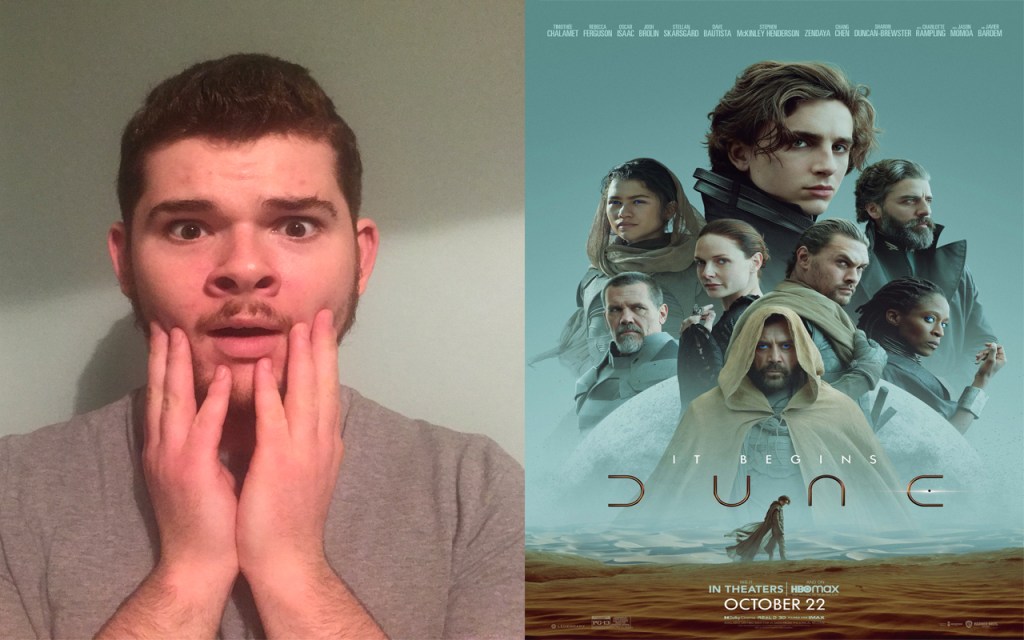
After reviewing ten Hellraisers, I needed a break but even before I was fully rested I knew exactly what I was reviewing next. As well as being the best adaptation of Frank Herbert’s novel to date (this is coming from someone who’s very fond of David Lynch’s effort by the way), Dune is a stunning and thought-provoking space opera unlike anything prior from Hollywood.
Paul Atreides (Timothée Chalamet) joins his family in settling on the planet Arrakis to maintain their security and reputation in a hierarchy of interstellar dynasties. A vicious plot to take down House Atreides awaits the family, a plot that will tear Paul from his privileged life as a prince and throw him into a world where only the strongest survive.
The Characters
Anyone who is familiar with Dune’s premise knows that the story is essentially a hero’s journey. This adaptation is aware of that fact as it does mostly focus on Paul. However, it is also aware that, since the days of the original Star Wars, audiences have been seeing nothing but hero’s journeys. Fortunately there’s more to Herbert’s tale than simply a prince’s rise to power, a lot more and this adaptation embraces that.
Paul is an empathetic protagonist in that very few of us can actually relate to what he’s going through but we can all imagine what it’s like. The same can be said about his parents. While the plot concerns numerous characters, our feelings are clearly meant to centre on Paul, his father Duke Leto (Oscar Isaac) and mother Jessica (Rebecca Ferguson).
All three of them are burdened with inescapable responsibilities; Leto is a Duke, Paul is his successor and Jessica is part of a religious group known as the Bene Gesserit. All these responsibilities are challenged when the family lands on Arrakis, Paul has to learn to be a leader and come to terms with the possibility that he’ll have to become one sooner than he expected.
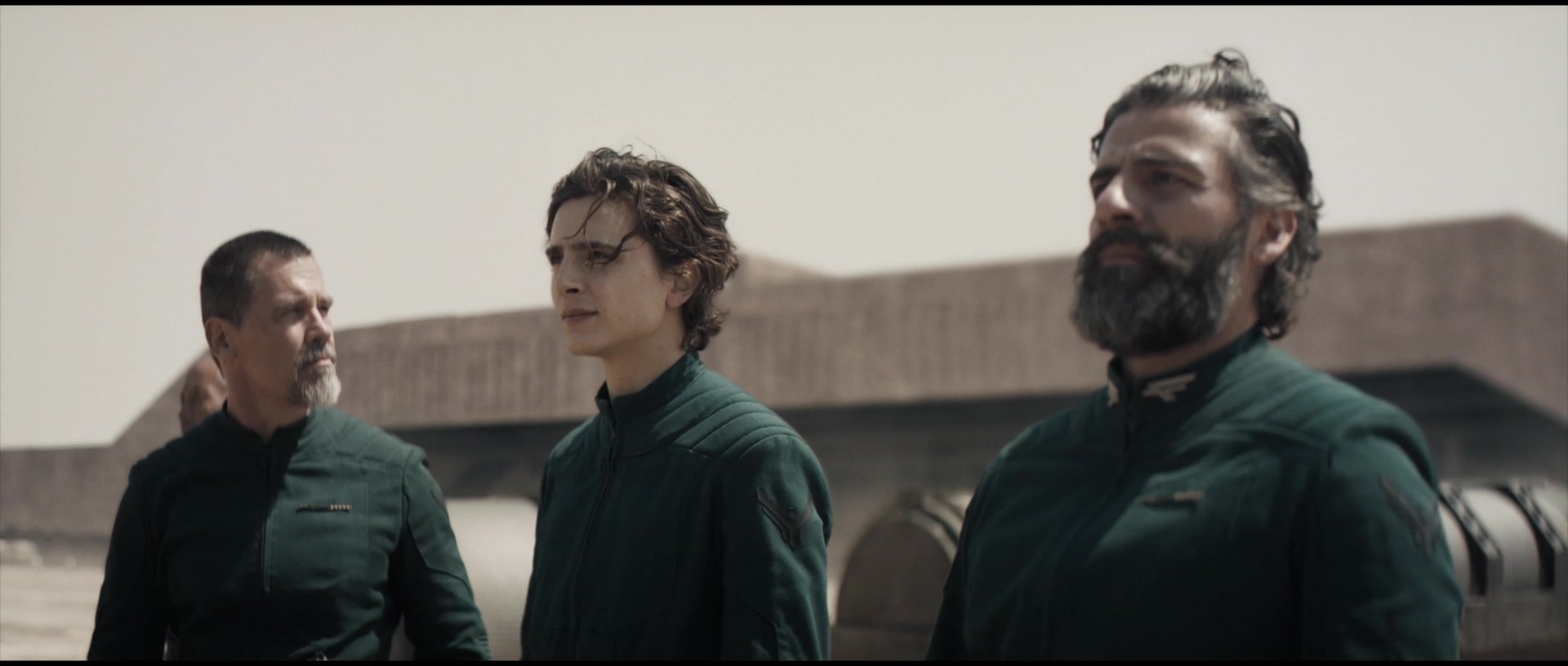
The other characters serve as either reminders of the trio’s responsibilities or as threats to them. For example, Gurney Halleck (Josh Brolin) is a reminder of Paul’s need to be martially competent as Gurney is his weapons teacher. Another example is Gaius Helen Mohiam (Charlotte Rampling) who’s a reminder to Jessica of her duty to the Bene Gesserit sisterhood. The Harkonnens clearly represent a threat to the Atreides’ responsibilities. Led by the Baron (Stellan Skarsgård) and his nephew Rabban (Dave Bautista), the Harkonnens share a long bitter rivalry with House Atreides hence they are more than ready to exploit any opportunity to conquer them.
The World
The brilliance of Dune’s worldbuilding has two notable components; the first is its look and the second is how it’s presented.
All the ships, vehicles and buildings on Arrakis look alien enough to pass as something from the future but rusty enough to look like its been used, to look as if this universe has been how it is for a long time, the story does take place in the ten thousandth century after all. The costumes and certain pieces of technology also look alien but unlike the ships and architecture, their alienness is stronger in that they look like they’re from a completely different culture.
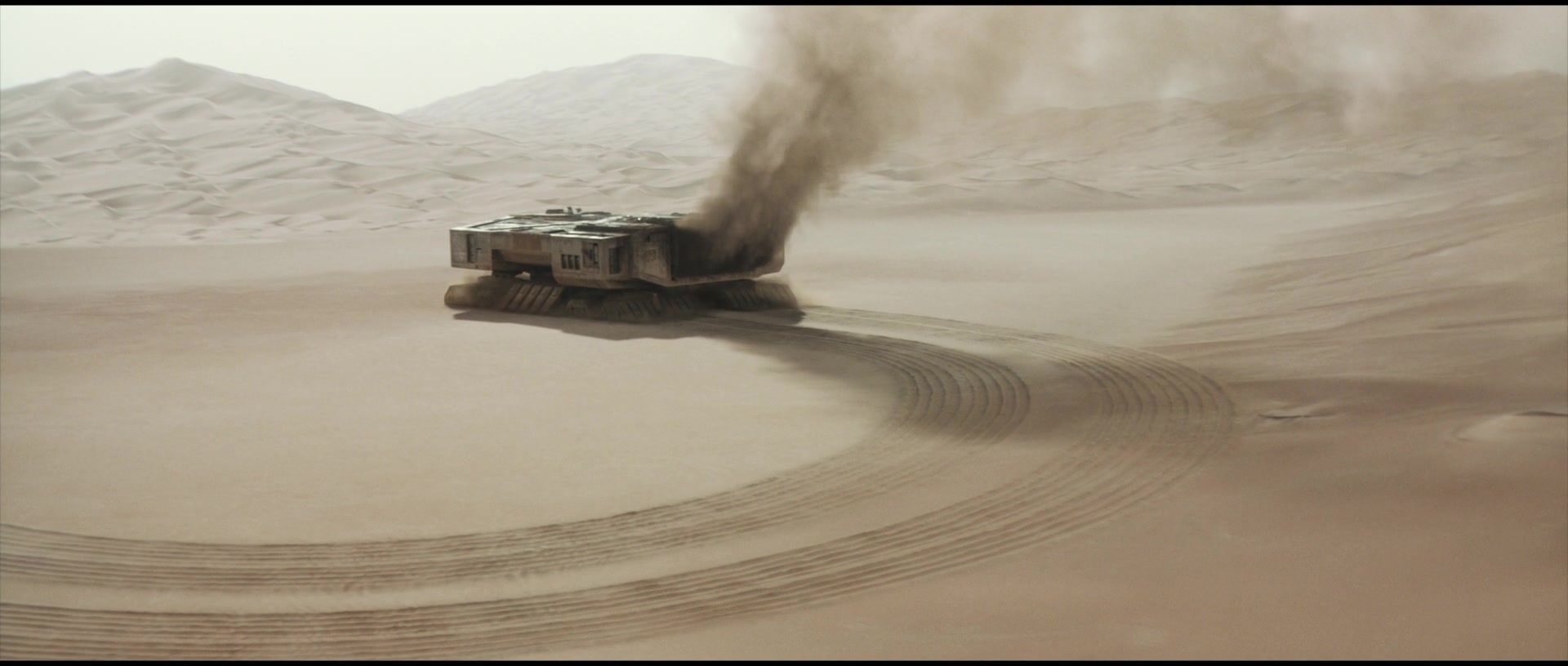
Dune masters the look of its future but, and this is much more impressive, it also masters the exposition of its future. Anyone who’s read Dune will know how much of an achievement this is.
If the film can’t show the backstory, it’ll weave it into the dialogue, almost seamlessly. There are few points where you feel like you’re being spoon-fed information or enduring an exposition dump. For most of the film you feel you’re just watching the people in this universe going about their business. The only consequence is that some of the dialogue can sound a bit clunky at times but they’re barely flaws in my opinion.
I’m struggling to find anything else to say as a lot has already been said since the film’s been out for almost a month. If you’ve seen the reviews, they’re glowing for a reason. Unless you’re really not a fan of space operas or period dramas, there’s little reason why you shouldn’t see it. Dune is simply marvellous and I highly recommend it.
I give Dune an outstanding 9 out of 10.
 Duffhood
Leave a comment