
As a prequel and a reboot, Prey is a wonderfully rare kind of beast. It takes a tired, worn-out formula, places it in an entirely new context while at the same time adjusting the formula so it still feels new and original. I have some nit-picks, unsurprisingly, but I believe that Prey is the best instalment in the Predator franchise since Predator 2, which came out over 30 years ago! That’s not a small feat.
Prey takes place on the Great Plains of North America in 1719. A young Comanche warrior known as Naru (Amber Midthunder) sees a strange vessel in the clouds, not far from where her tribe resides. When local wildlife are found dead and dismembered, Naru ventures out into the country, determined to prove herself as a warrior and to capture the mysterious predator she knows is approaching her home.
The Plot
Whenever I bring up the Hero’s Journey, the story template conceived by Joseph Campbell, it’s typically in relation to a franchise epic, usually in the sci-fi, superhero or fantasy genre. Seeing the Hero’s Journey incorporated into Prey, a much smaller scale historical action film with some sprinkles of sci-fi and horror, is really refreshing.
Naru seeing a Predator ship glow in the sky is her call to adventure, her leaving her tribe to follow the Predator is her crossing of the threshold. The tests and enemies she encounters include not only the Predator but the elements. Naru has to free herself from quicksand, flee from a grizzly bear, all the while learning of the Predator’s ability to blend in with its natural environment. And as if our hero has enough to worry about, she also has to contend with French voyageurs.
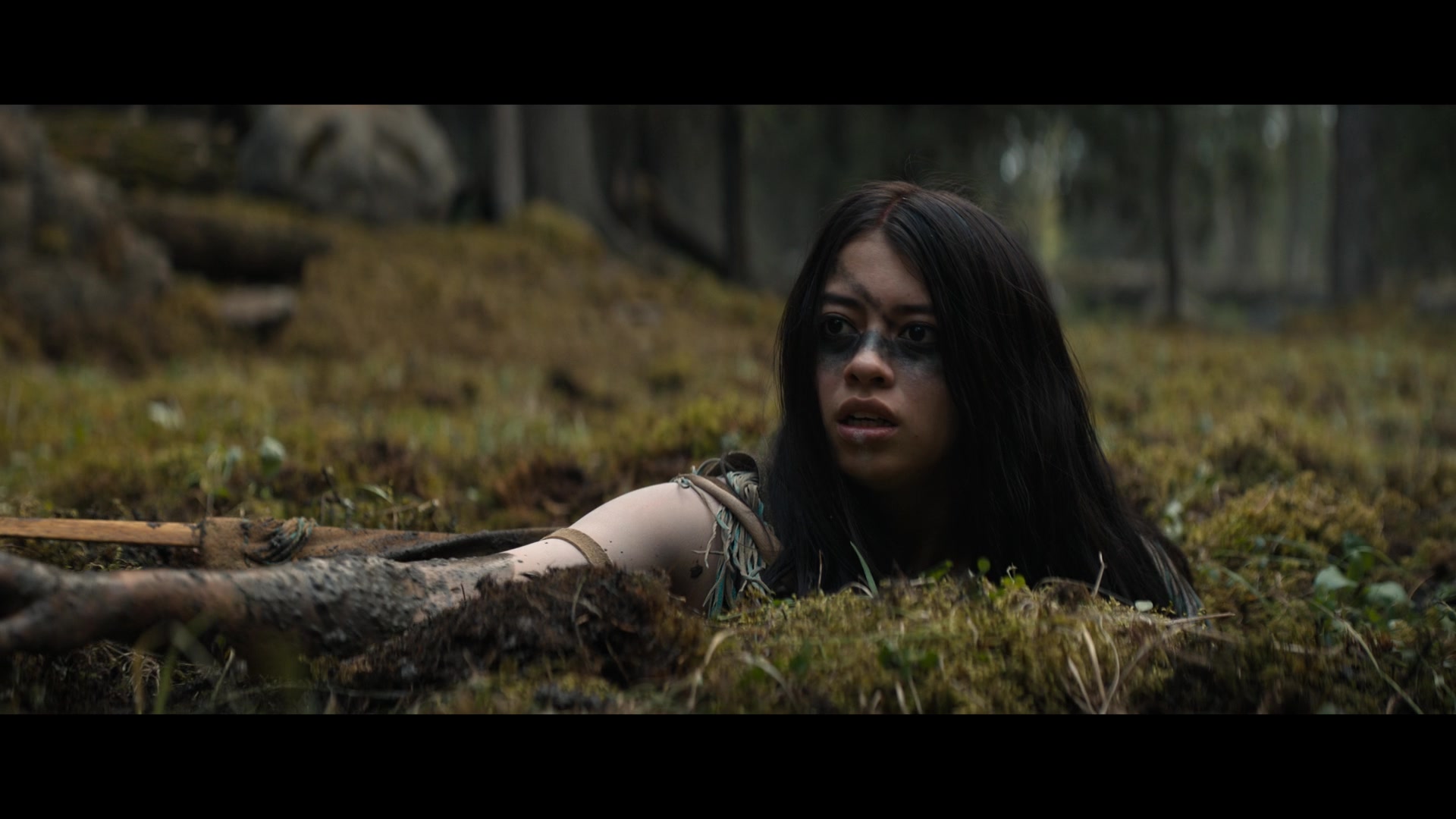
There’re times when you forget you’re watching a film that features a big-name franchise monster like the Predator, which is what in part makes Prey so great. It doesn’t follow the rigid formula that made the majority of the Predator sequels so mediocre.
The Execution
Prey’s characters, plot and setting are great. The presentation of these elements however, particularly in relation to the setting, is not perfect.
While our Comanche cast does use terminology from their native language, for the majority of the film they speak English, which is distracting. Their costumes and props are really authentic, you feel like you’re watching a Comanche tribe in 1719. Hence when the characters open their mouths and modern American English comes out, the verisimilitude of the film breaks a bit.
To make things worse, the French voyagers Naru encounters speak French and the one among them that can speak Comanche, speaks English.
Apparently the film was shot in English and Comanche but as far as I know the English version is the only one that’s been released, along with a Comanche dub.
The Predator looks wonderful, probably the most original take on the design since Predators. If you’re a fan of the franchise then you can tell that what we’re looking at is an earlier, less-sophisticated hunter than the one we first saw in 1987. Its invisibility isn’t as pristine, it’s easily broken and exposed by spears and animal bites. These details definitely remind you that you’re watching a Predator prequel.

There are references to previous Predator films, some more subtle than others. Fortunately they never get as excessive as the likes of Rogue One or Ghostbusters: Afterlife but some do seem forced in purely for fan service, but they could have been worse.
Prey is a great reboot that can be appreciated by both fans and non-fans of the franchise its rebooting. It’s a good Hero’s Journey told in a time and place that doesn’t get explored much in TV or film. It could spell hope for the future of the Predator franchise but regardless of what’s to come, Prey proves that there’s still some life to be had in this series and that’s good enough.
I give Prey an uplifting 8 out of 10.
 Duffhood
Leave a comment