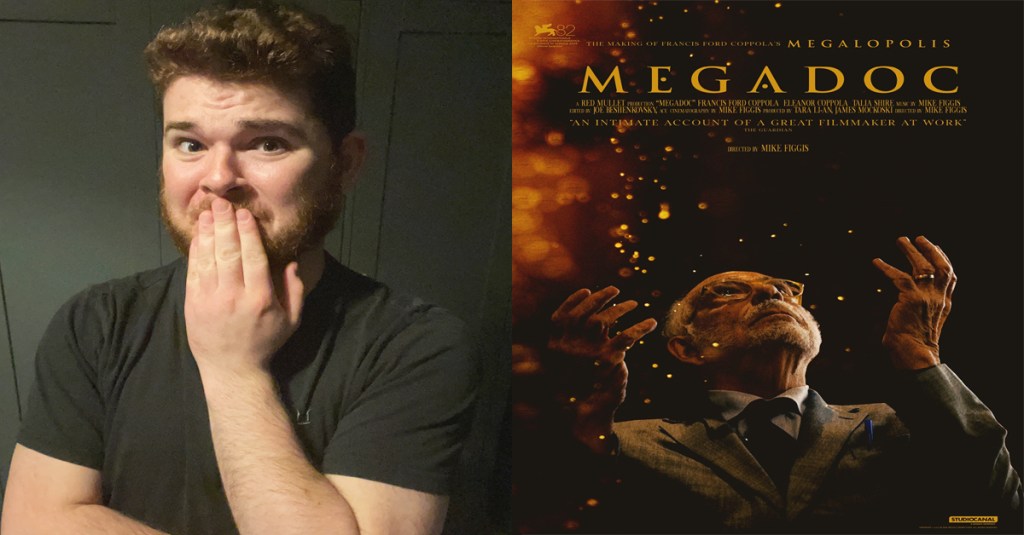
The title of Mike Figgis’s documentary chronicling the production of Francis Ford Coppola’s Megalopolis is very fitting. Clocking in at just under 2 hours, Megadoc is indeed a ‘mega’ documentary. The film is on par with the appendices for The Lord of the Rings trilogy in terms of the detail it goes into. However, like all these dramas about the Prince Andrew scandal, I can’t help but think that maybe it’s too early for a tell-all film about the making of Megalopolis.
There’s too little information available to paint a full picture at this time. Months before the film’s release, an extra, Lauren Pagone, accused Coppola of professional misconduct during the filming of a nightclub scene. Lauren has been adamant with her testimony, despite Coppola being successful in suing Variety for libel. Megadoc never mentions this incident. We know that the cast and crew had to sign NDAs before agreeing to work on the film, however, the expiration dates for these NDAs have not been made public.
Now, for all we know, the incident Pagone described never occurred, and the NDAs the cast and crew signed expire next week. Similarly, for all we know, Andrew is innocent and Epstein did kill himself.
My point is, none of these questions have been answered beyond a reasonable doubt, and until they are, Megadoc is in danger of becoming painfully dated. I hope that doesn’t happen. I hope that nothing indecent took place during the production because, at the moment, I’ve got nothing but good things to say about Megadoc.
As with many of Coppola’s productions, chaos reigns and Megadoc captures that. Figgis narrates the film and expresses his struggles in chronicling the production while simultaneously capturing something worth showing.
Figgis’s film crew is small; many times, it consists of just him and his equipment. All the scenes that’re shot on the set are handheld. This gives the film less of a fly-on-the-wall feel and more of an in-the-trenches perspective.
Even the interviews with the cast are quite unglamorous; for many of them, it’s just Mike and the actor. This makes them a lot more intimate than an interview you’d see in a featurette or promotional piece. Some members of the cast get really honest, revealing feelings and experiences that don’t flatter Coppola or the production.
Shia LaBeouf essentially spills his guts in his interviews. He talks of his ongoing recovery from alcoholism, repairing his friendship with fellow castmate Jon Voight and his clashes with Coppola, which Figgis captures as they happen.
The same applies to interviews with the crew. From set designers to members of the visual effects team, some express admiration for Coppola’s directing style, while others convey frustration.
In the first 25 minutes, we see the rehearsals. These scenes do flatter Coppola, showing him to be not just a great visionary but also a great leader. He gets the cast to do exercises to help them find their character and walk in their shoes. It’s very endearing to see these performers, some of them international movie stars, do exercises like they’re in a local drama group.
Pieces of archive footage illustrate how long Coppola has worked on Megalopolis and the many forms it took over the years. These clips include some very surprising footage of Robert De Niro, Uma Thurman and Billy Crudup doing a read-through in 2001. We also see a 2003 screen test of Ryan Gosling playing Cesar Catilina, a role eventually given to Adam Driver.
As a writer, I was of course interested in the drafting of the screenplay, however Megadoc doesn’t cover that. It’s a portrait of a director at work, not a screenwriter. Figgis’s documentary shows Coppola doing what he does best, “confronting chaos” as he describes it.
I sincerely hope that nothing comes out that overshadows the dignity of this film or the production it documents because, as I’ve said, I’ve got nothing but good things to say about the former.
I give Megadoc an elegant 10 out of 10.
It’s so good, it just might persuade you to watch Megalopolis again.
 Duffhood
Leave a comment