
Like it or not, Iron Lung will go down in history. Plenty of YouTubers have made competent and watchable films that’ve gotten theatrical releases, but Iron Lung’s box office success makes it a standout. Nothing can take that away from it. As a film, I have a lot of admiration for it, but the runtime and restricted setting make it a challenging watch. Compared to other films set in one room, I don’t think Iron Lung would make it into the top 10, and I love Markiplier.
Set in an apocalyptic future where humanity has become an endangered species, a convict (Markiplier) is put in a small submarine and tasked with exploring the oceans of a small moon that’s entirely made up of blood.
Before I break anything down, I need to comment on Markiplier’s performance; he’s pretty good. I was worried that when he’d start shouting or crying, the film would devolve into one of his playthroughs and it really doesn’t. After 45 minutes, I’d forgotten I was watching someone who’d made their bread and butter playing Five Nights At Freddy’s. The man can act.
The Worldbuilding
I love sci-fi that relies on your imagination to create its world. Sci-fi that gives the sense that what you’re seeing is just one story out of millions in a vast universe.
Iron Lung excels at this for the most part. Markiplier’s convict spends the entire film within his submarine. The set is only a few feet wide and a few feet long. It is extremely confined. From his dialogue with his superiors via the submarine’s radio, we learn that humanity, despite achieving interstellar travel, is on the brink of extinction.
We also learn that Markiplier was convicted for his involvement in a terrorist attack on a space station. He was part of an organisation that had preserved the last tree from Earth. He and his co-conspirators had a close bond as they referred to each other as brothers and sisters. Markiplier’s character has not seen any of his fellow fighters since his capture.
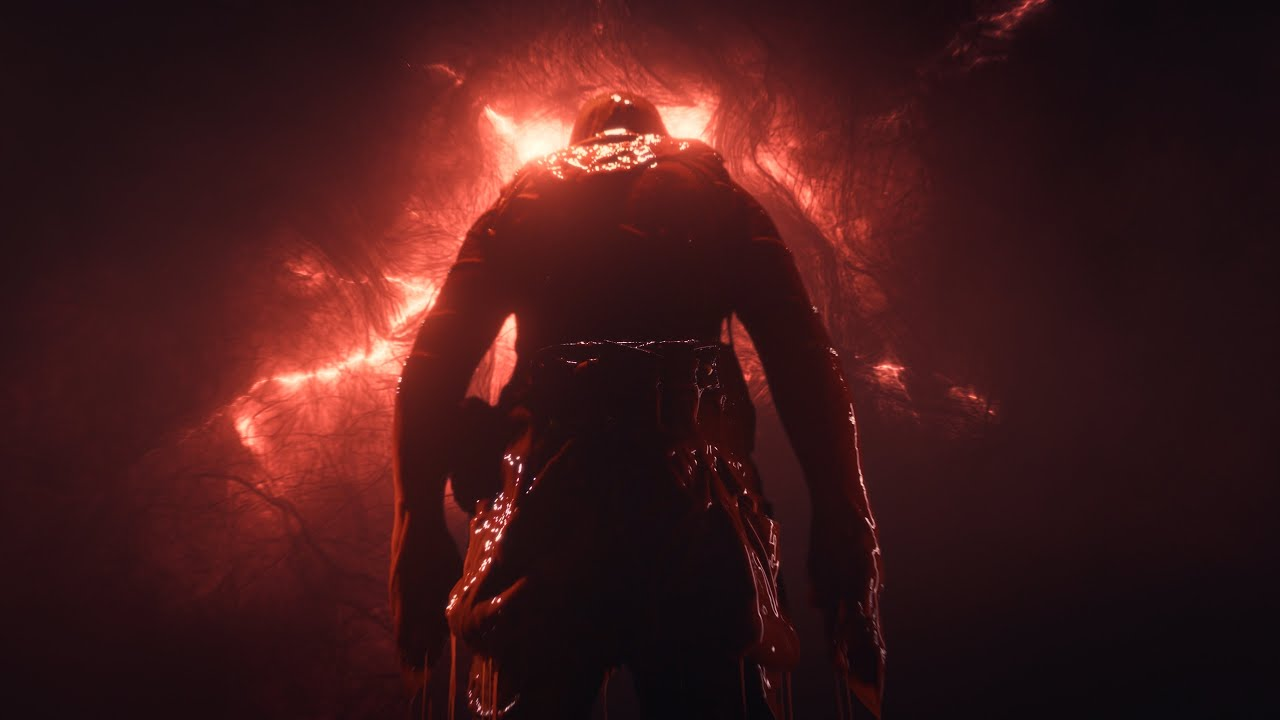
This is a good story, one that is quite literally told to us. It’s hard to stay interested in a 2-hour film that concerns an interstellar apocalypse, galactic terrorists and countless space stations, when all we see of it is a man in a small room. If 30 minutes were cut, Iron Lung would be a much less demanding watch. The film makes a blatant effort to make the submarine’s interior visually interesting; the cinematography really plays with the space, but alas, I actually almost fell asleep on a couple of occasions.
Iron Lung’s mythology is too big for its low-fi aesthetic.
The Horror
While there are some jump scares, Iron Lung gets under your skin in ways more elegant than your Blumhouse run-of-the-mill horror. The idea behind it is chilling enough for starters. A moon with oceans made of blood evokes many disturbing questions.
Whose blood is it? Is it human? What lives in it?
‘Tis only the latter question that receives an answer. The submarine’s X-ray camera is Markiplier’s only window to his surroundings. It takes a photo every 30 seconds or so, which, as he progresses deeper into the red ocean, is more than enough time for something to get him.
The images his camera takes are concentrated nightmare fuel. The night vision filter reminds you of how hopelessly isolated Markiplier is, and the fact that there is such a delay between each shot being taken creates even more tension. Like with the Weeping Angels in Doctor Who or the animatronics in Five Nights At Freddy’s, we’re not scared of what’s in the image; we’re scared of how much closer what’s in the image has gotten since the image was taken.
I can see myself watching Iron Lung again. I might appreciate it more then, but for now I’m standing by my criticism of its runtime. If a film is going to take place in a single location or room, then it better be big. 10 Cloverfield Lane-big, because despite its filmic efforts, Iron Lung did lose me a few times.
I give Markiplier’s directorial debut an honest but proud 6 out of 10.
 Duffhood
Leave a comment