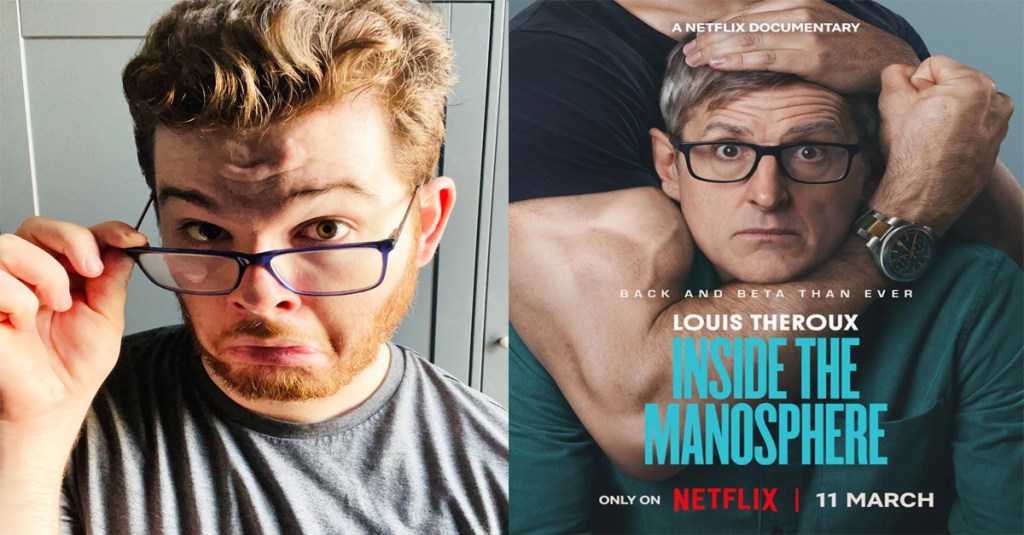
If Inside The Manosphere is Louis Theroux’s worst film, then I think he should be proud. He may not explore the topic as much as he could, but when interviewing his subjects, he gets them to question their ideologies in ways that are revealing. If these influencers continue to reign the zeitgeist, more documentaries will be produced, and I can picture Louis’ film being listed in the top 10 best made on the phenomenon.
Louis Theroux shadows the most prominent figures said to be part of the manosphere: Justin Waller, Sneako, HStikkytokky and Myron Gaines. He travels between Europe and America, talking to the men in their studios, luxury apartments and in public as they make content. By interviewing them, their colleagues and, in some instances, their partners, Louis seeks to learn their origins and motives.
The Angle
Louis speaks to all the influencers with his signature non-confrontational demeanour. HStikkytokky and Myron make no secret of their distrust of Louis. At times, they dismiss him as a dishonest journalist with ‘an agenda,’ there just to make a ‘hit piece.’
Louis’s approach prevails in these exchanges. He never raises his voice and rarely interrupts his subjects. Just like in his other films, he lets them say their piece, which typically is more than enough to discredit their position. The most telling encounters occur when Louis interviews Myron, specifically when he asks him about his polygamous behaviour with his partner within earshot.
When he’s not talking to Myron, Sneako or HStikkyTokky, Louis is monitoring their social media platforms and researching their backgrounds. Andrew Tate is inevitably brought up.
As the film draws to a close, Louis tries to explain how the manosphere came to be, using everything he’s learned from his interviews as well as considering the rise of Andrew Tate. This is where I think Louis’s approach is inefficient and may explain the unfavourable reviews Inside The Manosphere has received.
Louis’s Findings
Any concerned citizen who’s been following the manosphere phenomenon won’t learn much from Louis’s film. He concludes, as many already have, that absent parents, insecurity and trauma are the key factors that made these men who they are. This is quite common knowledge and it’s a little sad that a prestigious documentarian like Louis couldn’t come to a more nuanced conclusion.
Andrew Tate is the missing ingredient. He’s the first thing everyone thinks of whenever the manosphere is mentioned. For one reason or another, Louis never meets Andrew, and the film suffers for it. With no on-camera interview with Andrew Tate, the film’s investigation feels incomplete. Perhaps if the shoot were delayed by a year, the logistical stars could’ve aligned for Andrew to appear on screen.
Regardless of timing, Louis Theroux: Inside The Manosphere offers a somewhat shallow exploration of its topic. The interviews are beautifully conducted and offer a lot of psychological insight into the kind of characters found within the mansophere. The film should be applauded and remembered for these interviews alone. However, the societal insight Louis’s investigation concludes with is nothing new. As stated before, it’s pretty common knowledge.
I give Inside The Manosphere an average 6 out of 10.
 Duffhood
Leave a comment