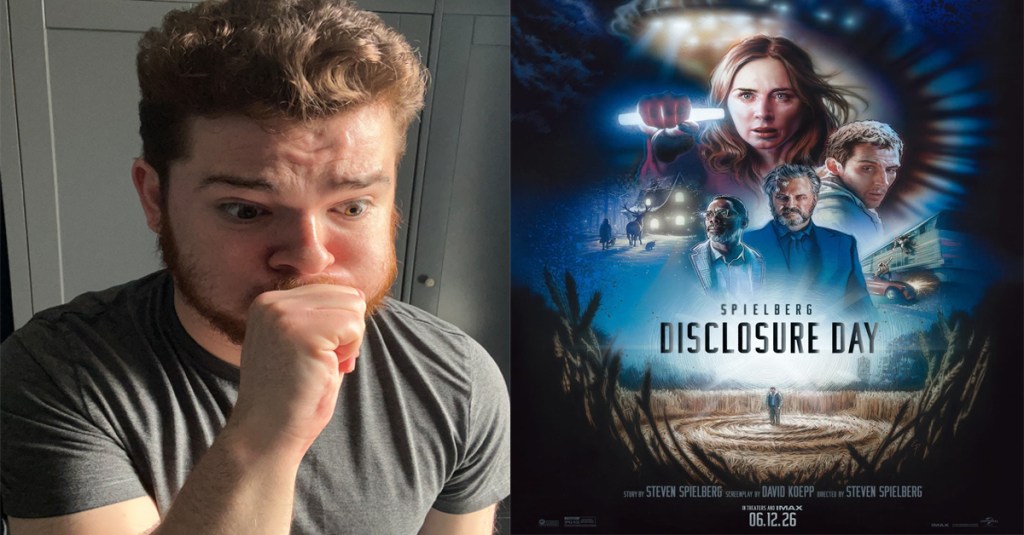
Spielberg’s science fiction has always adapted with the times. The concepts and moral dilemmas always reflect the current science and societal issues. How he and his collaborators dramatise these concepts, however, has changed very little. This has been problematic for his latest films in the genre, from A.I. Artificial Intelligence to War of the Worlds. Disclosure Day, despite its many attributes, is another unfortunate example.
As World War Three simmers on the horizon, a meteorologist (Emily Blunt) is suddenly gifted with the ability to read and understand all minds, even animals. Meanwhile, a cybersecurity expert (Josh O’Connor) evades authorities to expose an extraterrestrial conspiracy.
The Story
The central idea of Disclosure Day is a great one. There are countless tales of governments covering up alien encounters, but few, if any, consider the ethics of making such knowledge public.
How would humanity respond to the discovery of an extraterrestrial intelligence? What would that information do to people psychologically? These are big questions that get talked about but never confronted in most sci-fi films.
Disclosure Day is a standout just for attempting to answer these questions. Josh O’Connor’s fugitive is determined to release the files in his possession, Edward Snowden style. His girlfriend (Eve Hewson) is against his mission, citing world religions and the order they bring to society.
His former boss (played by Colin Firth in a surprisingly good villain performance) uses everything at the disposal of his corporation and the US government to retrieve the stolen files. He cites the unpredictable barbarism in humanity, as well as the irreversibility of such a leak, as reason enough to stop one from happening.
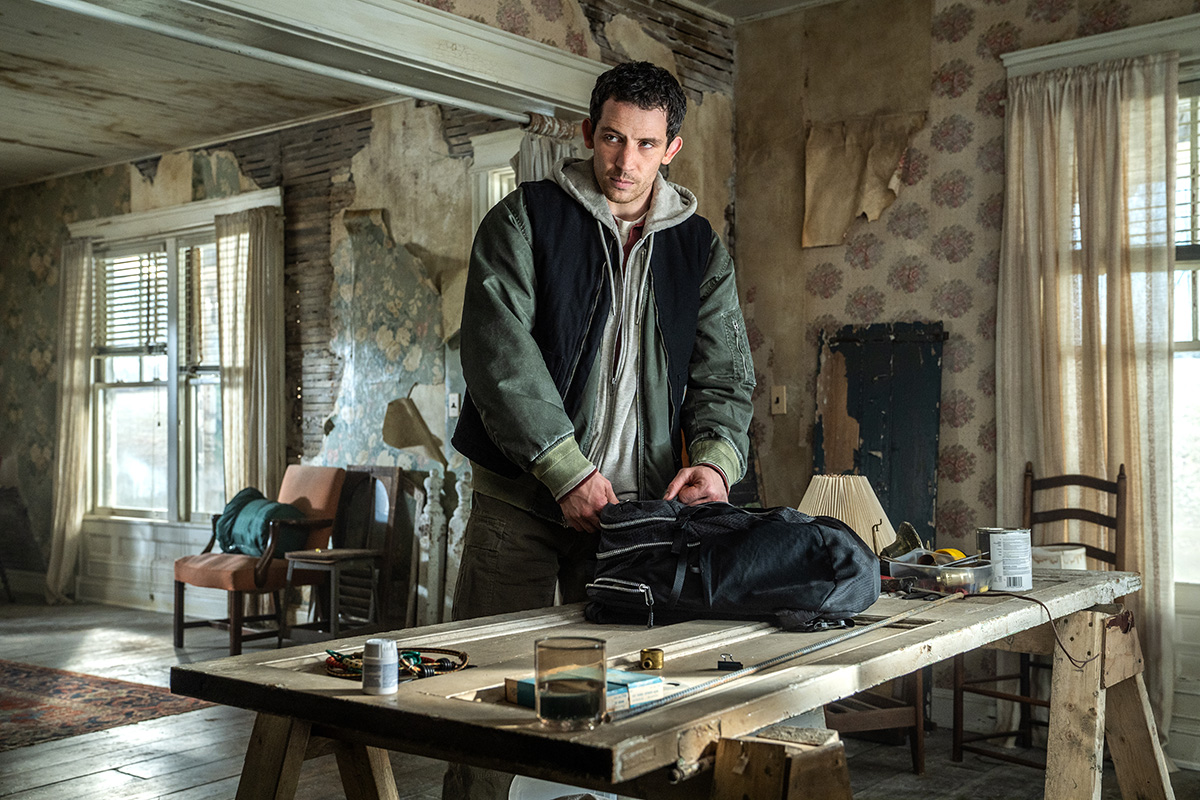
These conversations are as deep as Disclosure Day gets to tackling the issue of humanity’s collective response to first contact. Most of the film is just Josh O’Connor’s whistleblower being chased by Colin Firth’s agents.
The plot centring on Emily Blunt’s meteorologist is more Spielbergian in the traditional sense. It’s about family, trauma, communication and, above all, empathy. This should’ve been its own film. You can’t fault its theme regarding the importance of empathy, especially today, when many leaders and commentators have branded it as a weakness.
However, playing alongside a thriller plot, with global stakes rather than personal ones, results in a very uneven film.
The Filmmaking
You can seldom fault Spielberg as a director. Even his worst films prove to be incredibly entertaining and utilise state-of-the-art filmmaking technology. Disclosure Day is no exception.
The action sequences are top-tier. As someone who grew up with the abysmal Transformers franchise under Michael Bay’s administration, I am grateful for action scenes where I can actually see what’s happening. The car chases are fast, thrilling and easy to perceive.
The big highlight, in terms of action, is a scene involving a car and a train track. You may have seen snippets in the trailers, but the full sequence is one of the tensest I’ve seen this year. It’s beautifully put together.
Despite the stellar filmmaking and great central idea, I can’t help but feel let down by Disclosure Day. The film is a dysfunctional marriage between two stories that are better apart. I sincerely hope this isn’t Spielberg’s final contribution to science fiction cinema, because I think we all know that he can do a lot better.
I give Disclosure Day a painful 6 out of 10.


Leave a Reply